Destinations · Spain
Valencia with kids in March: rain, Las Fallas from a distance and the Albufera
March 29, 2026
· Yasmine Kas
Updated on September 20, 2026
March in Valencia with kids: 1,800 kilometres of driving for sun and Las Fallas, and we got rain and mascletàs that sounded like bombs twenty kilometres away. The best bits were on the edges: the beach across from our apartment in Puçol, the Albufera (free) and Glasol ice cream in Port Saplaya.
In this story
There is no shortage of Valencia guides with neatly numbered lists of things to see and do. This is not one of them. This is what actually happened when we went, and why it turned out to be exactly the trip we needed.Instagram sold us a different trip
We had been watching other travel families do Valencia for months. Vibrant Fallas statues in golden light. Kids running through the Ciutat de les Arts i les Ciències like it was their personal playground. Paella by the harbour. It looked effortless, warm, and impossibly beautiful.So we booked an apartment in Puçol, about twenty kilometres north of the city, packed the car, and drove south for two days. Overnight stop near Orange, then the long stretch through Spain. 1800 kilometres. We arrived to rain.
That first week set the tone for something we did not expect. Our daughter got sick almost immediately. The weather stayed grey. And then Las Fallas started, and with it, the kind of noise we had never experienced before.
The sound of Las Fallas twenty kilometres away
We had been warned about the mascletàs after we booked. Every afternoon, Valencia sets off what can only be described as controlled explosions in the city centre. So we knew what was coming. But knowing and experiencing are two very different things. We were twenty kilometres away in Puçol, and it sounded like bombs going off. Deep, heavy blasts that seemed to come from everywhere at once. It was not frightening exactly, but it was bizarre. The kind of sound you feel in your chest.We had imagined walking through the streets during the festival, admiring the towering Fallas statues, soaking up the atmosphere. But the crowds during peak days were overwhelming even from a distance: the traffic, the noise, the sheer density of people. We made a quiet decision: we would skip the city during the busiest days and find our own way to experience the festival.
We saw the fireworks once from a distance. It was fine, but nothing spectacular from where we were. The truly impressive displays in the city centre were simply too far away. Las Fallas, it turns out, is more about the thunder than the sparkle.
Parc Turia and a giant named Gulliver
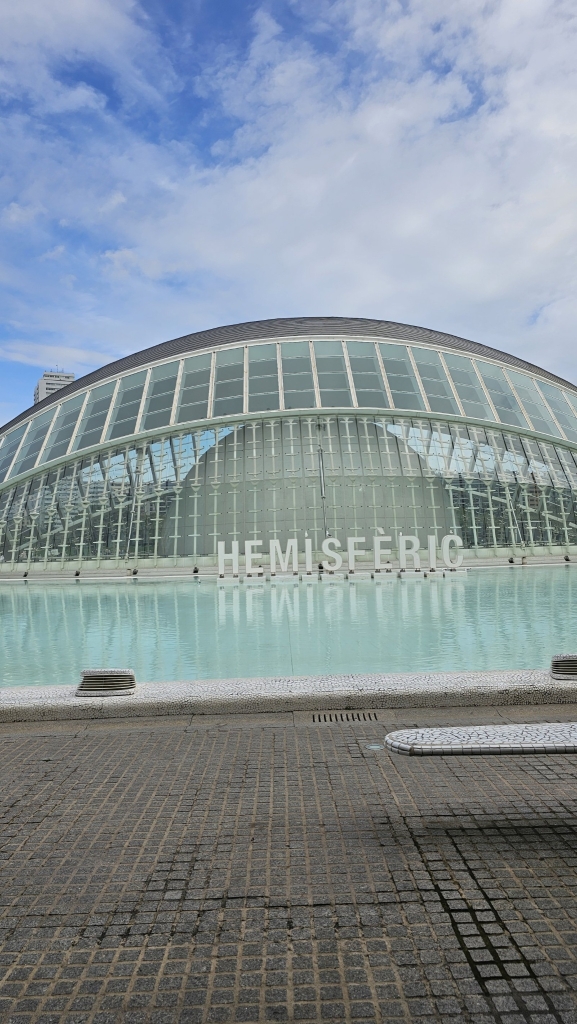
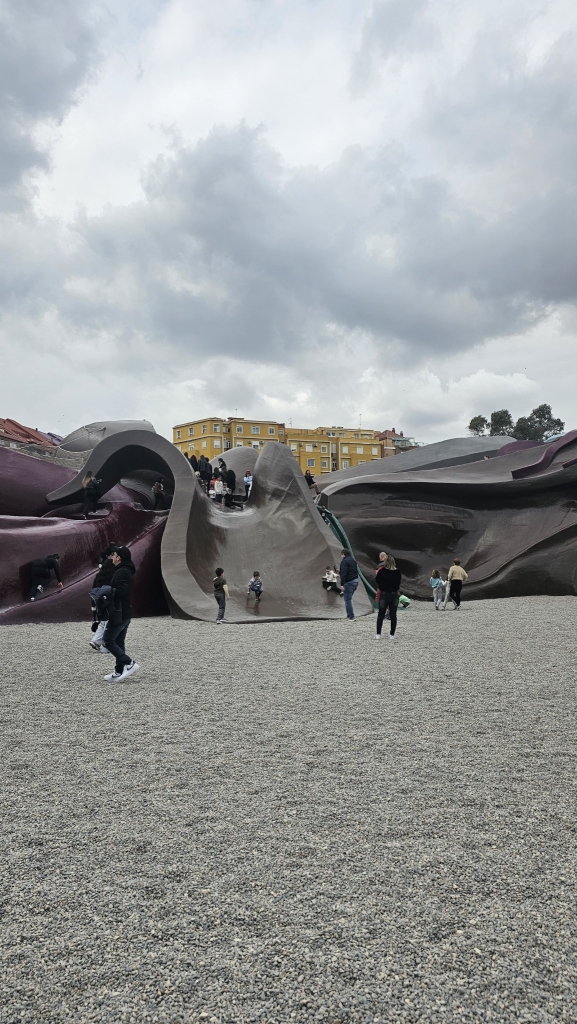
When the weather finally broke, we drove into Valencia and parked near the Ciutat de les Arts i les Ciències. The buildings are staggering. Futuristic shapes rising from water like something from another century. Our kids actually loved them, stopping to look up and point things out to each other. But the park behind it took everything up another level.Parc Turia is a long green corridor that runs through the city where a river used to flow. There are playgrounds scattered throughout, and we let the kids lead. They climbed, ran, disappeared behind hedges. Then we found Parc Gulliver, a massive sculpture of Gulliver lying on his back, turned into a playground with slides carved into his body, ropes across his chest, stairs winding over his legs.
The kids vanished. For about three minutes we could not see them anywhere in that enormous structure, and our hearts did what parents’ hearts do. They reappeared laughing, completely unaware of the small crisis they had caused.
We ate lunch sitting in the grass. Then the rain came back, as if it had been watching us from behind the clouds, waiting for the right moment.
The Albufera we almost skipped
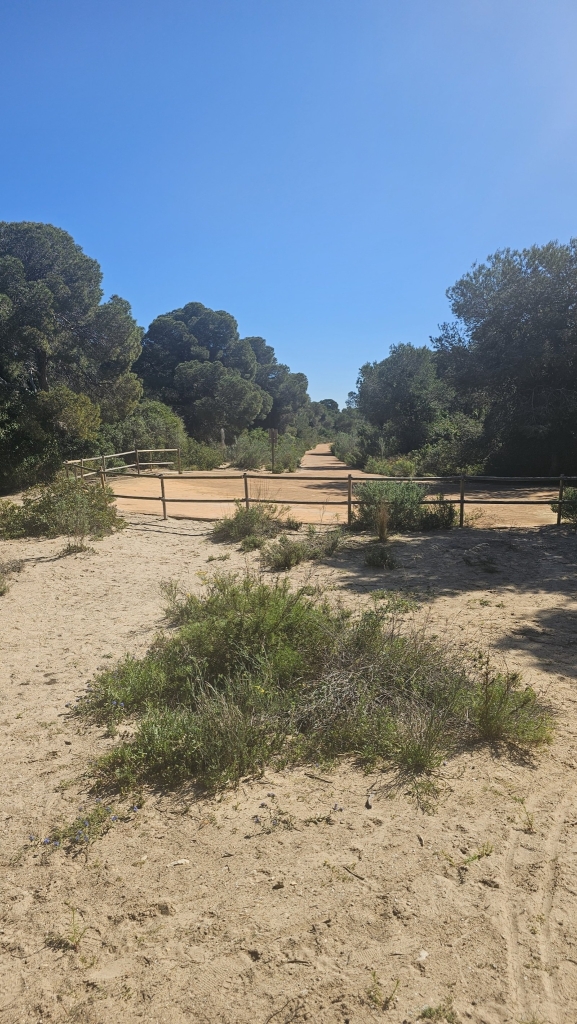
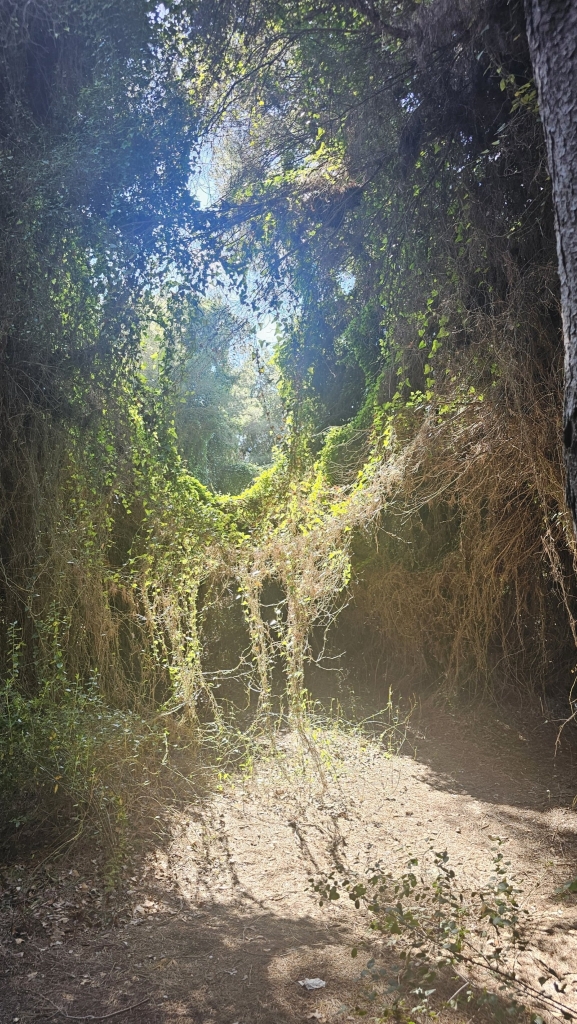
Albufera National Park was not on our list. We drove there on a whim one morning when the sky looked promising, parked at Gola del Pujol, and followed the signs for Ruta Botánica.A wooden walkway led us through dense vegetation. Butterflies landed on the railing. We spotted a salamander crossing the path. Birds sang from every direction, and for a while nobody spoke, not even the kids.
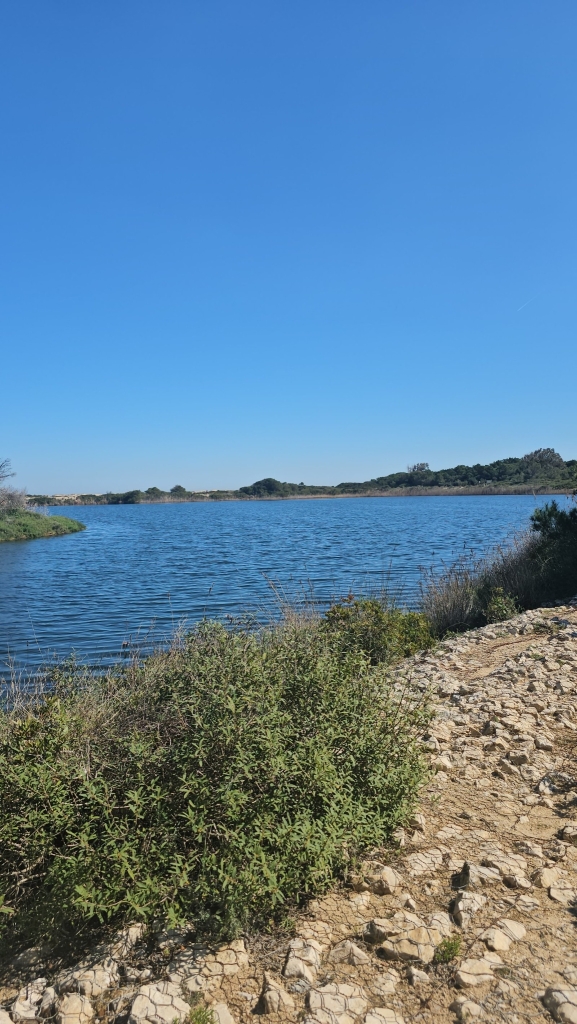
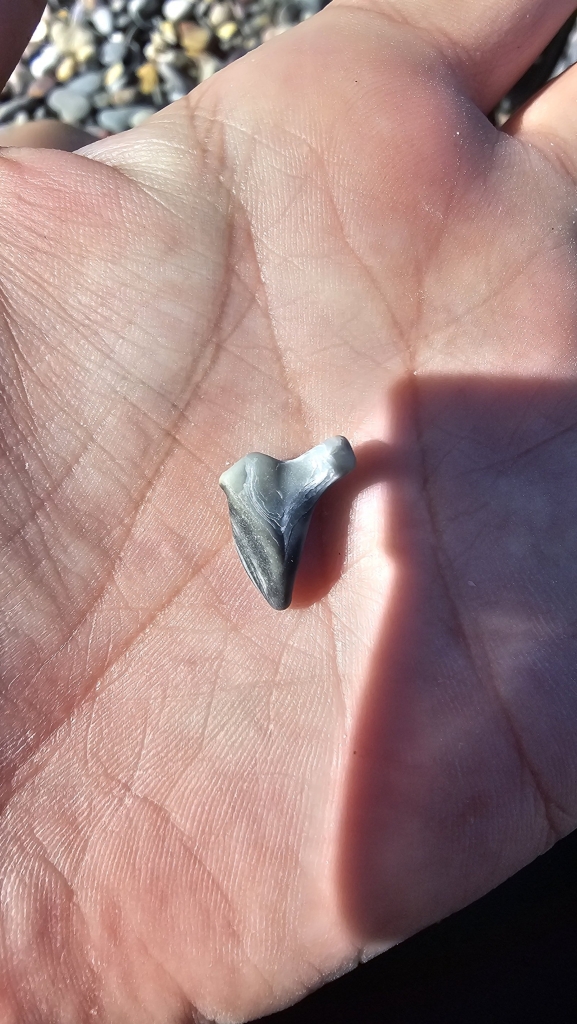
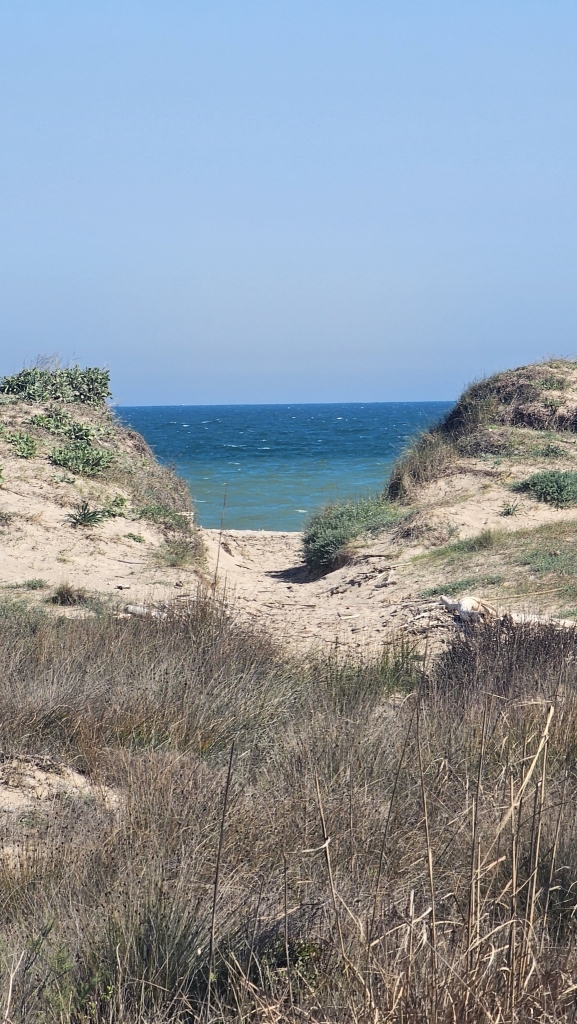
The trail opened up to a small lake hidden between dunes, with an island sitting quietly in the middle. It felt like something that should not exist this close to a major city. We continued to Devesa beach, which was wide, quiet, and completely covered in shells. The kids dropped to their knees and started collecting. And between the shells and stones, I found something unexpected: a fossilised shark tooth. Millions of years old, just lying there in the sand.
This was the day nobody had shown us on Instagram.
Port Saplaya and the best ice cream verdict
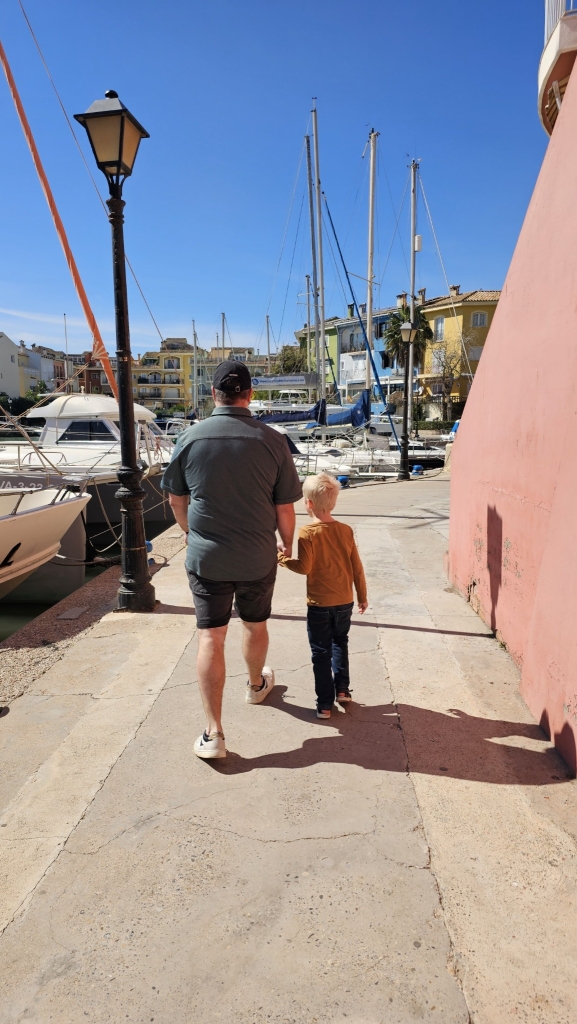
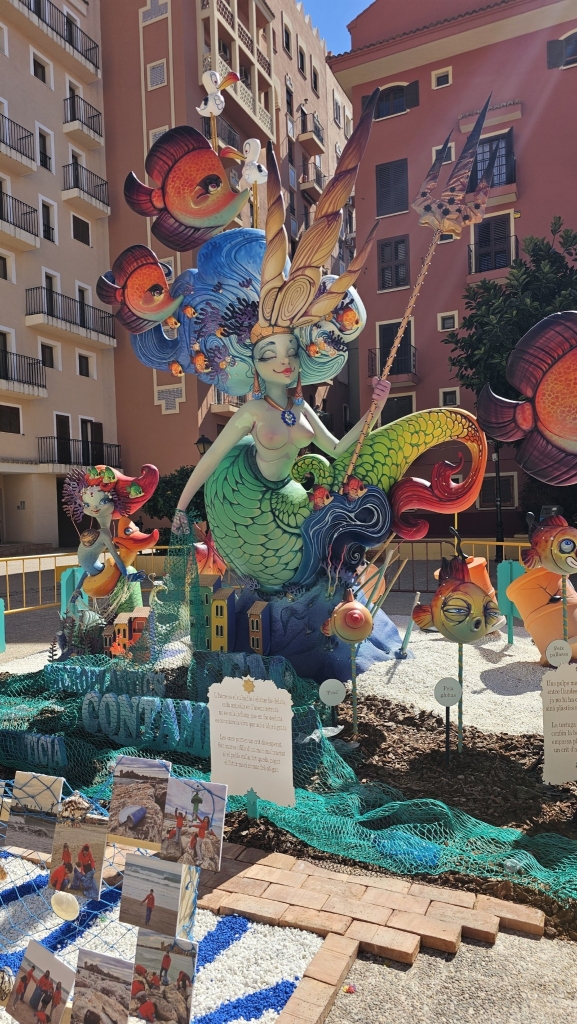
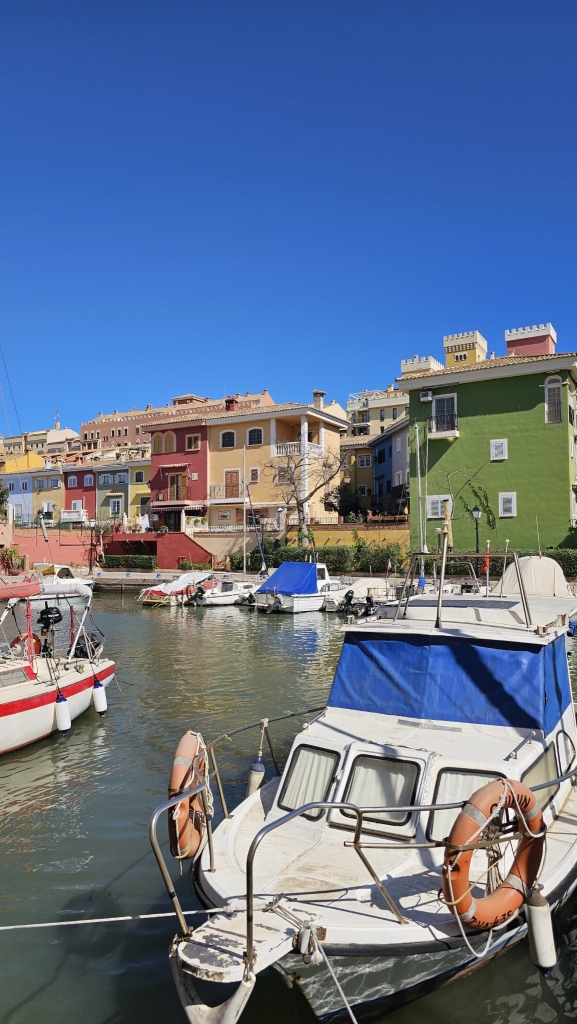
Port Saplaya is sometimes called Little Venice, and while that comparison is a stretch, it has its own charm. Pastel-coloured apartment buildings line a small harbour. Narrow bridges cross the water between them. It reminded us a little of Port Grimaud, on a smaller and quieter scale.Two Fallas statues were displayed near the harbour, and this is where we finally saw the craftsmanship up close. The detail was extraordinary. Faces carved with expression, colours layered meticulously. It was a much better way to experience the festival than fighting through city crowds.
We walked along the harbour, then tried to loop back along the coast and discovered our path ended at the sea. No way through. So we turned around (our youngest was not thrilled about the extra walking) and found Glasol, a small artisan ice cream place. Dulce de leche con chocolate. The cashier gave a thumbs up when we ordered it, and she was right.
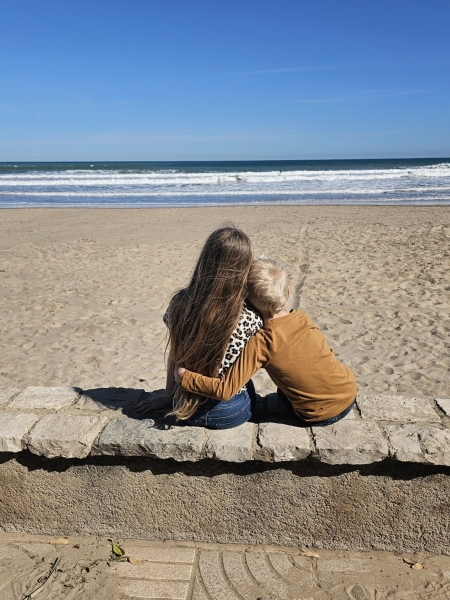
We sat on the beach afterwards, watching surfers ride the high waves. When we asked our youngest later what his favourite moment of the entire trip was, he said: the ice cream at that water place, and the beach.
Stones, shells, and a petrified eel
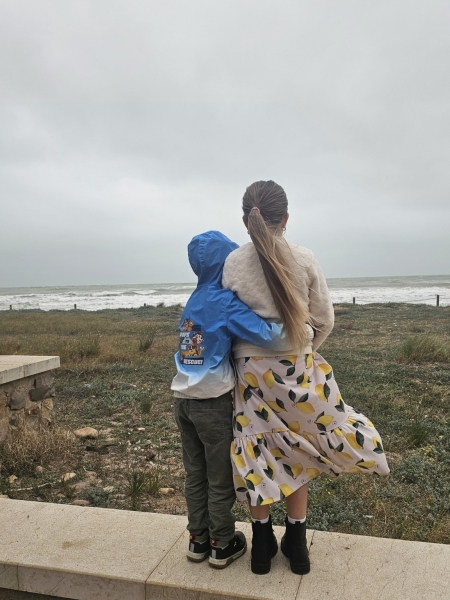
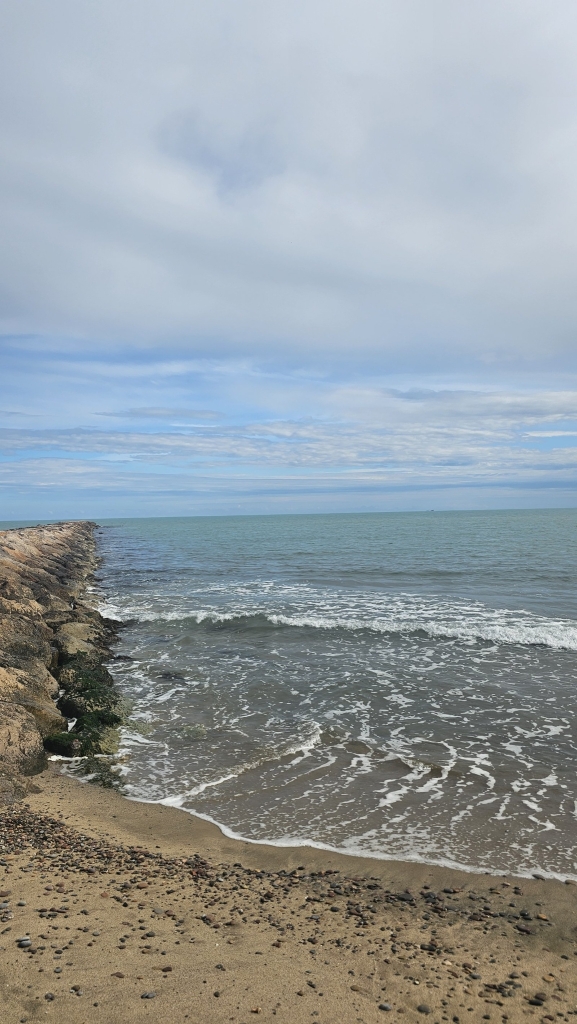
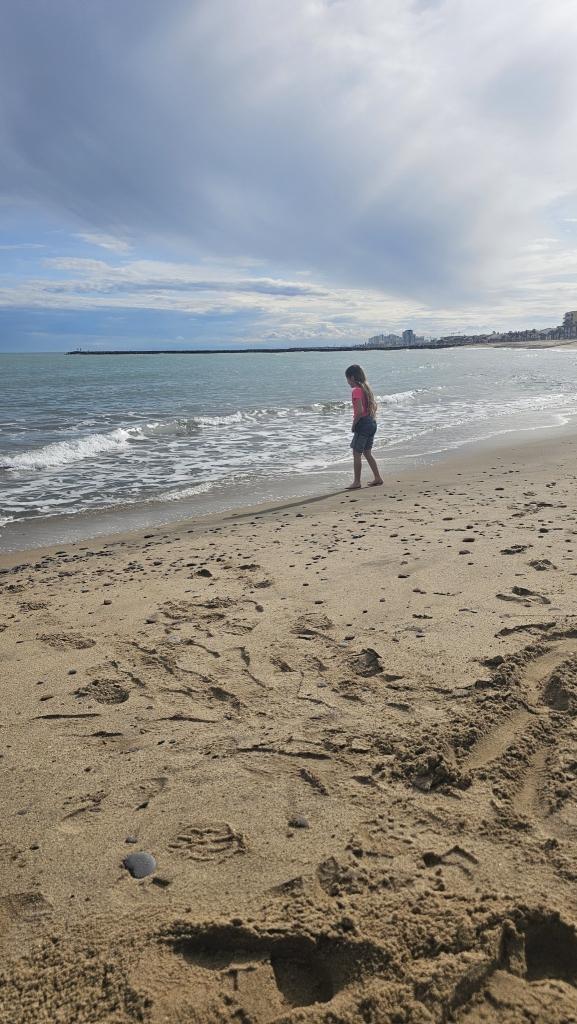
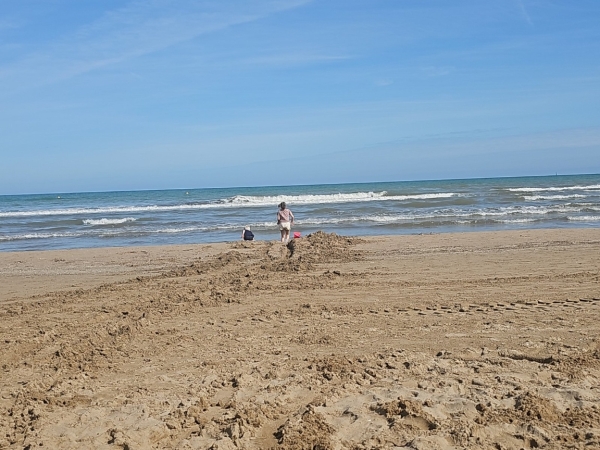
They collected stones. They collected shells. They sorted them by colour, by size, by some system only they understood. For hours. No screens, no plans, no tickets to buy. Just Mediterranean coastline.
One afternoon my husband spotted something at the waterline and threw it while yelling "sea snake." It was not a stick. It was an eel: hard, dried out, somehow preserved by the salt water. No smell, just the unmistakable shape of something that should not be thrown at your family. The kids found it equally disgusting, hilarious, and fascinating. They talked about it for days.
We also spent a day at Valencia’s main beach: wide sand, a palm-lined boulevard, volleyball courts. But the kids kept asking to go back to their beach. The one with the stones.
Our base in Puçol
The apartment we booked through a private owner on Booking.com turned out to be a good find. Spacious, with a proper kitchen, a small garden, and an outdoor pool shared with the complex. The host was helpful and responsive throughout our stay.The pool, unfortunately, stayed unused. The weather simply never cooperated long enough. Our host mentioned that March is usually warm enough to swim. We just happened to hit the wrong weeks. In warmer months, this would be an easy, comfortable base with everything you need.
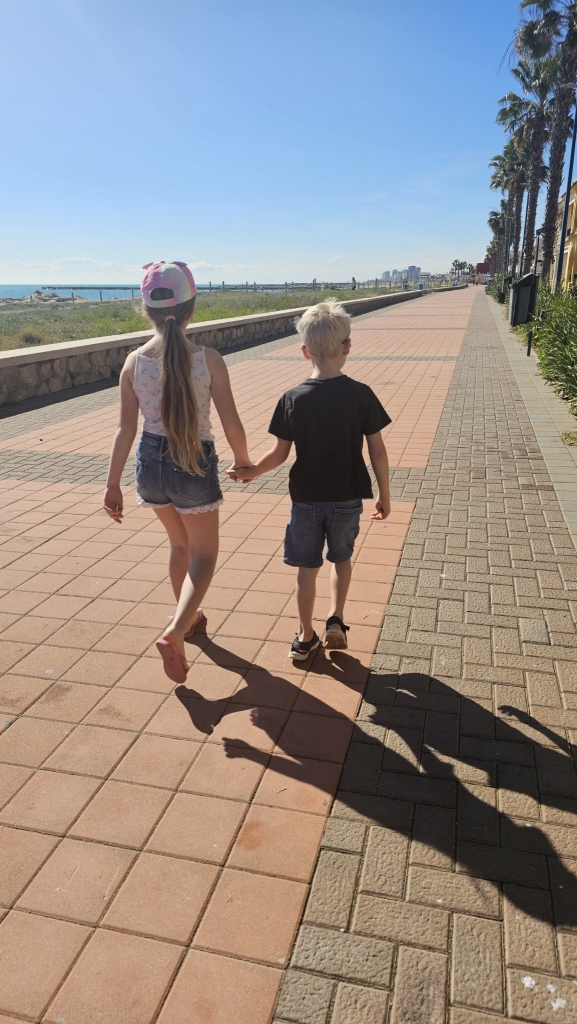
But the best part of the location was the beach. Literally across the street. No drive, no parking, no planning. Just walk out and you are there.
What 1800 kilometres taught us
Driving 1800 kilometres each way with children is something we would not do again, at least not for a destination where we could fly instead. Having your own car is wonderful once you are there, but the drive takes two full days in each direction, and by the time you arrive, you have already spent energy you cannot get back.We also learned that booking a trip based on weather expectations is a gamble. March in Valencia can be twenty-five degrees and sunshine. It can also be storms. We got both, but not in the order we wanted.
And perhaps the most important thing: stop planning trips based on what other families show you online. Their highlights are not your highlights. Their kids are not your kids. We did not get the Valencia we saw on Instagram. We got ours.
Practical tips: Valencia with kids
- Puçol is a solid base: beach across the street, pool at many apartments, twenty minutes to Valencia by car
- Albufera National Park: park at Gola del Pujol, follow Ruta Botánica. Free. Bring binoculars if you have them
- Parc Gulliver in Parc Turia is free and unforgettable for kids, but keep an eye on them, the structure is huge
- Port Saplaya is worth a half-day trip. Fallas statues, harbour walks, Glasol ice cream
- For churros, this small place near our apartment was a favourite
- Las Fallas (March 1-19): if your kids are sensitive to loud noise, stay outside the city centre during mascletàs
- The drive from the Netherlands is roughly 1800 km. Budget two days each way. Consider flying and renting a car instead
- Ciutat de les Arts i les Ciències is worth seeing from outside even if you do not go in. The architecture is striking. We skipped the Oceanogràfic this time, but if you are standing there anyway, go in. Tickets start at around 37 euros per person, and for a few euros more the science museum is included.
The trip that rewrote itself
When I think back on Valencia, I do not think about the things we missed. I think about our daughter feeling better and eating churros on the balcony. About our son holding up a stone he had just painted as if it were the most valuable thing in the world. About watching the coast from our quiet street in Puçol while the sound of distant explosions reminded us that somewhere, a city was celebrating without us.We went chasing someone else’s version of this trip and came home with our own. The rain forced us to slow down. Las Fallas pushed us to the edges, where things turned out to be more beautiful anyway. And the kids, when asked what they loved most, said: the beach.
Sometimes a trip does not need to be what you planned. Sometimes it just needs to be what your family actually needed.

No comments yet
Be the first. I read everything, and I usually reply as well.
Reply to