The Jura, France: beauty, heat, and choosing what works
September 3, 2024 Yasmine Kas
Slow days, heat, water, and learning when to stop chasing highlights
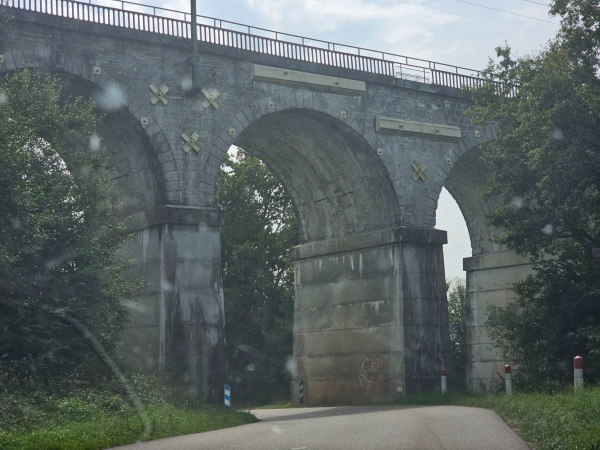
After leaving Belgium, we drove south into France and arrived in the Jura on a warm summer afternoon. What struck us immediately was how deceptive the landscape is. On the map, everything looks close. In reality, the Jura is a region of hills, valleys and winding roads. Distances stretch quickly, especially when the heat is relentless and energy is limited.
We stayed in a small village surrounded by nature, in a beautifully renovated 18th-century house. Stone walls, wooden beams, a hectare of land, a small river running through it. It was idyllic in every sense of the word. It was also very warm. Without air conditioning, the heat lingered inside, and that shaped our days more than any itinerary ever could.
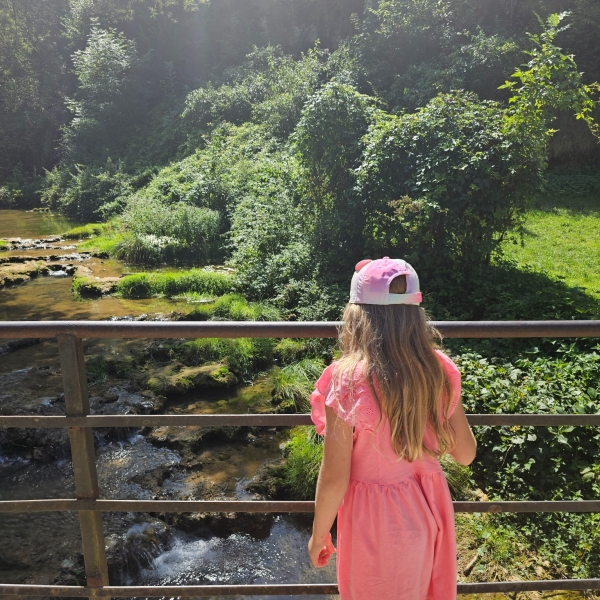
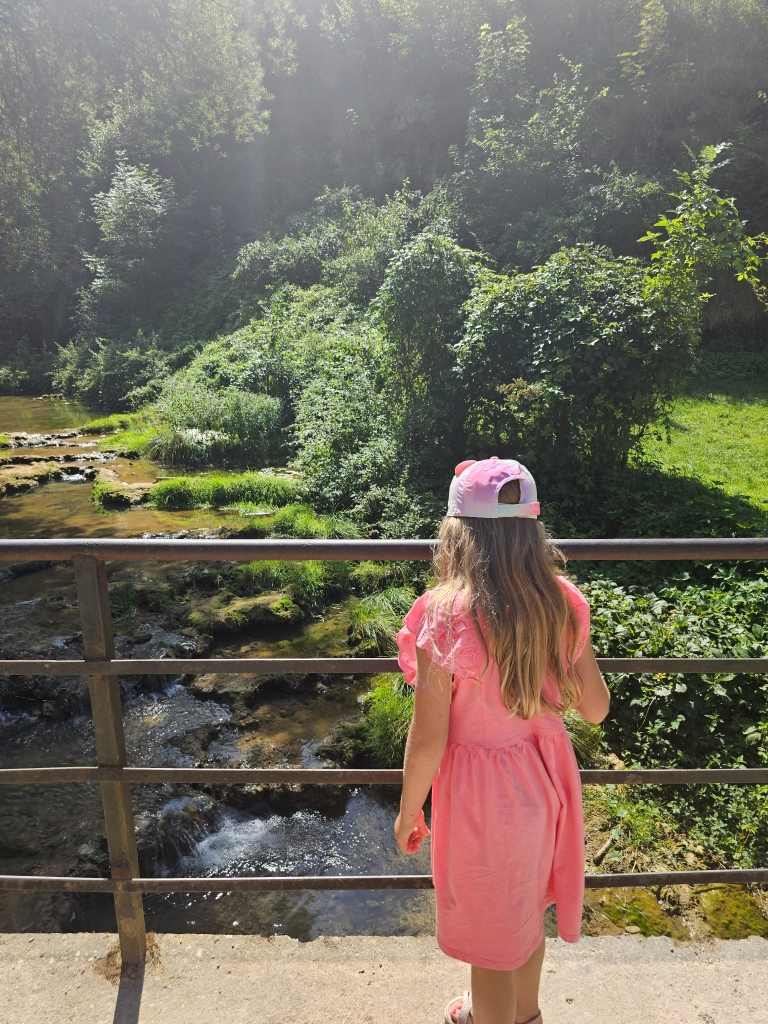
Right next to the house, the river offered both magic and reality. Clear water, small waterfalls, shallow spots where the kids could wade and deeper sections where swimming was possible. It sounded perfect, and often it was. Until wildlife made itself known. A sudden encounter with a large river crayfish ended one exploration abruptly, followed by a full sprint back to the house. Nature here is generous, but also very present, and not always comforting for small children in unfamiliar surroundings.
Despite the heat and the slower pace it forced upon us, the Jura delivered plenty of moments that made us stop and take it all in.
Château-Chalon and Baume-les-Messieurs
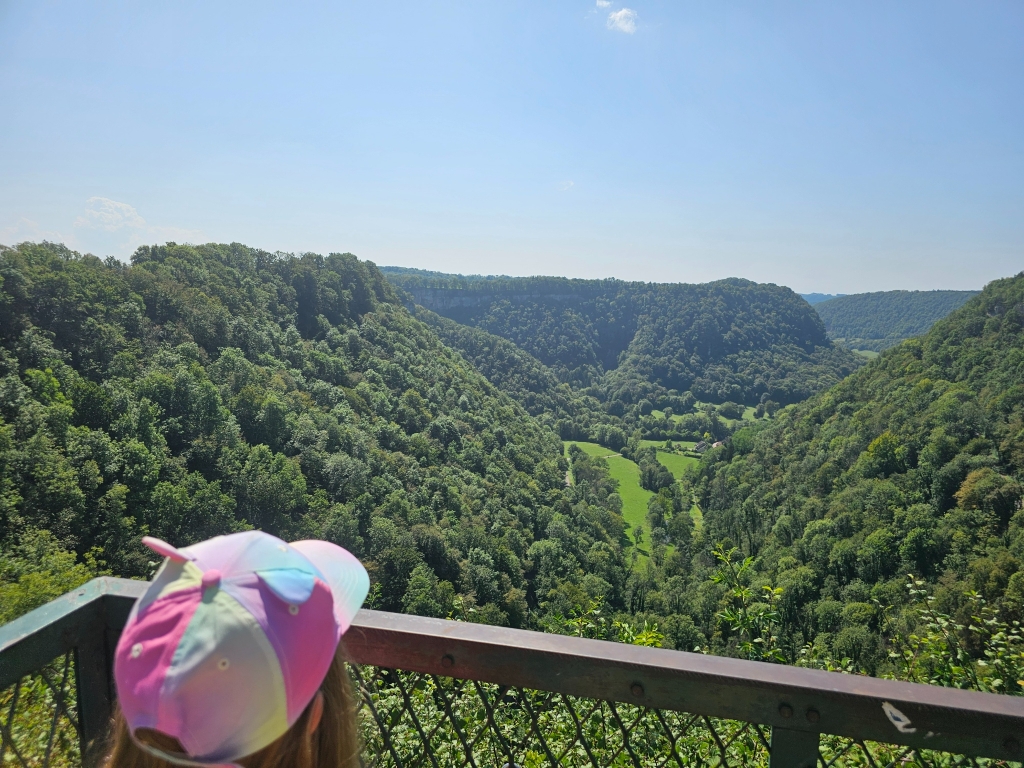
One of those moments came at Château-Chalon. Perched high above the vineyards, the village sits dramatically on the edge of a cliff. The drive up makes it immediately clear that the Jura may look gentle on a map, but it really isn’t flat at all.
We stopped at a viewpoint just outside the village. One of the kids had fallen asleep in the car, and leaving the car wasn’t an option, so this became a short, improvised pause rather than a full visit. Standing next to the car, I took in the view with the other child while the heat shimmered over the vineyards below. Rolling hills, distant villages, rows of vines stretching endlessly. Even without walking anywhere, the impact was immediate.
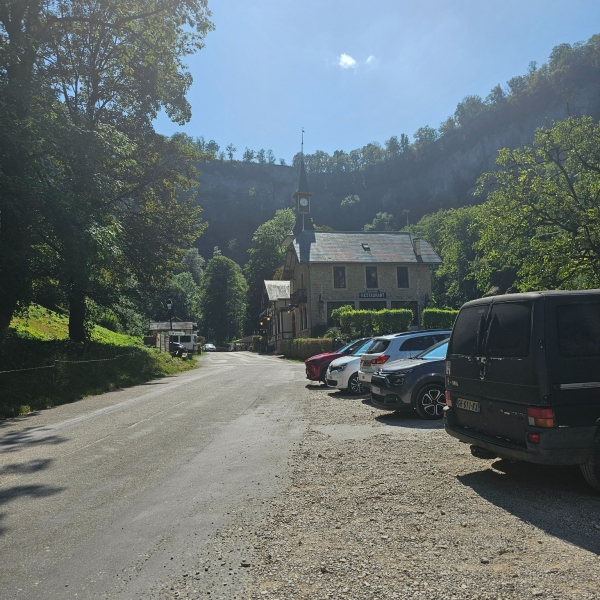
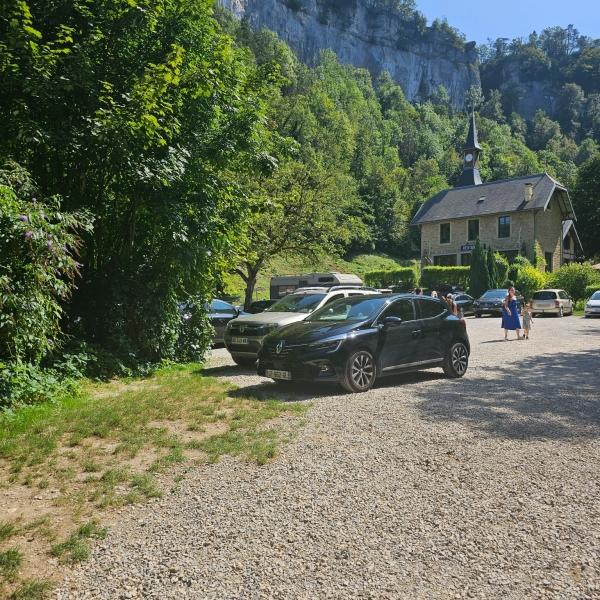
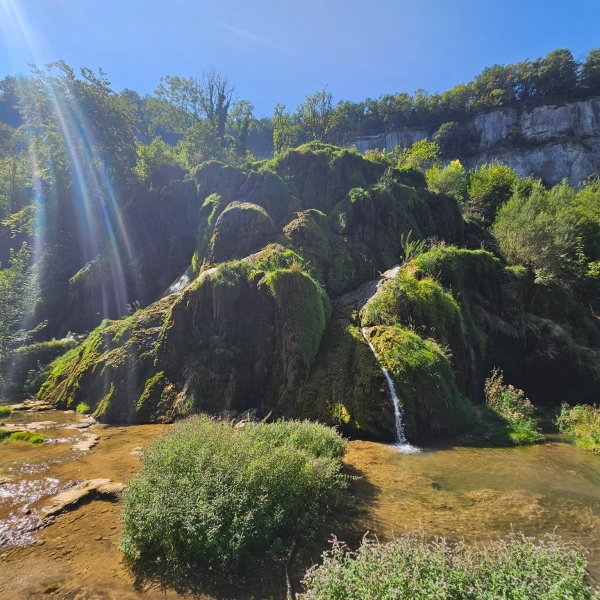
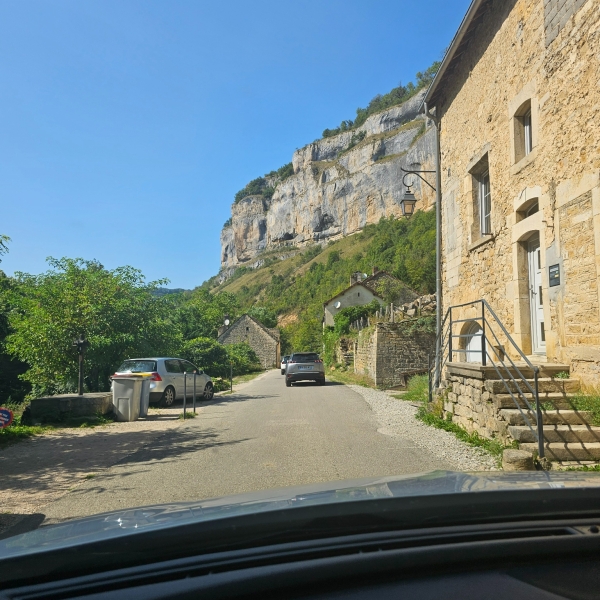
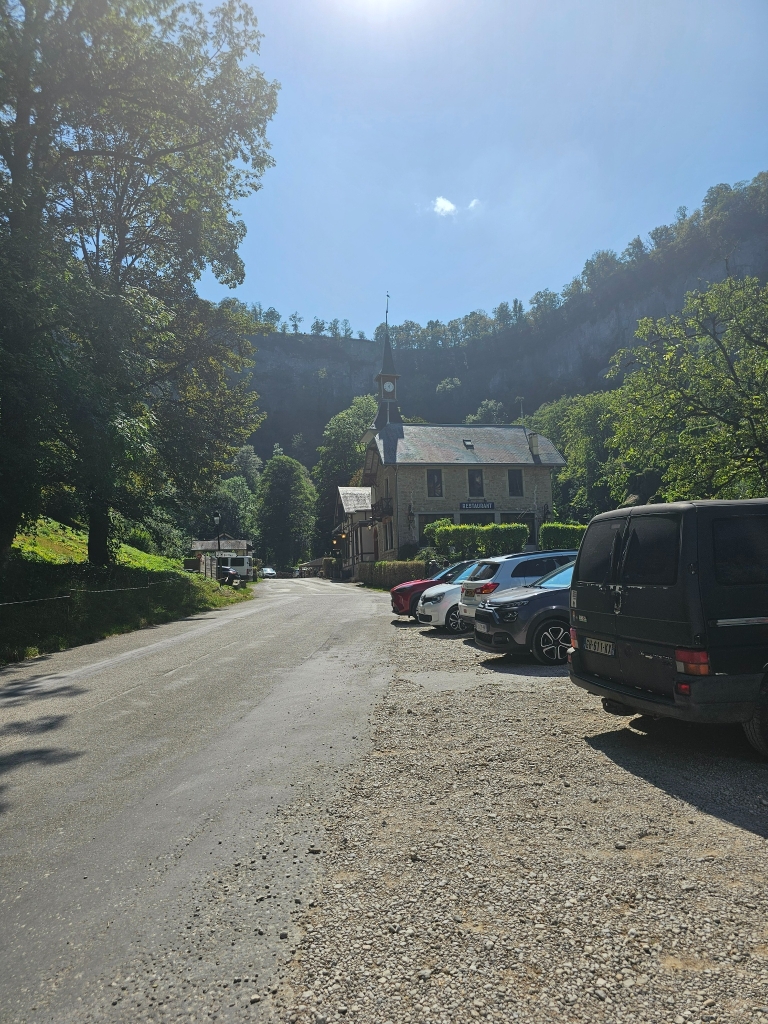
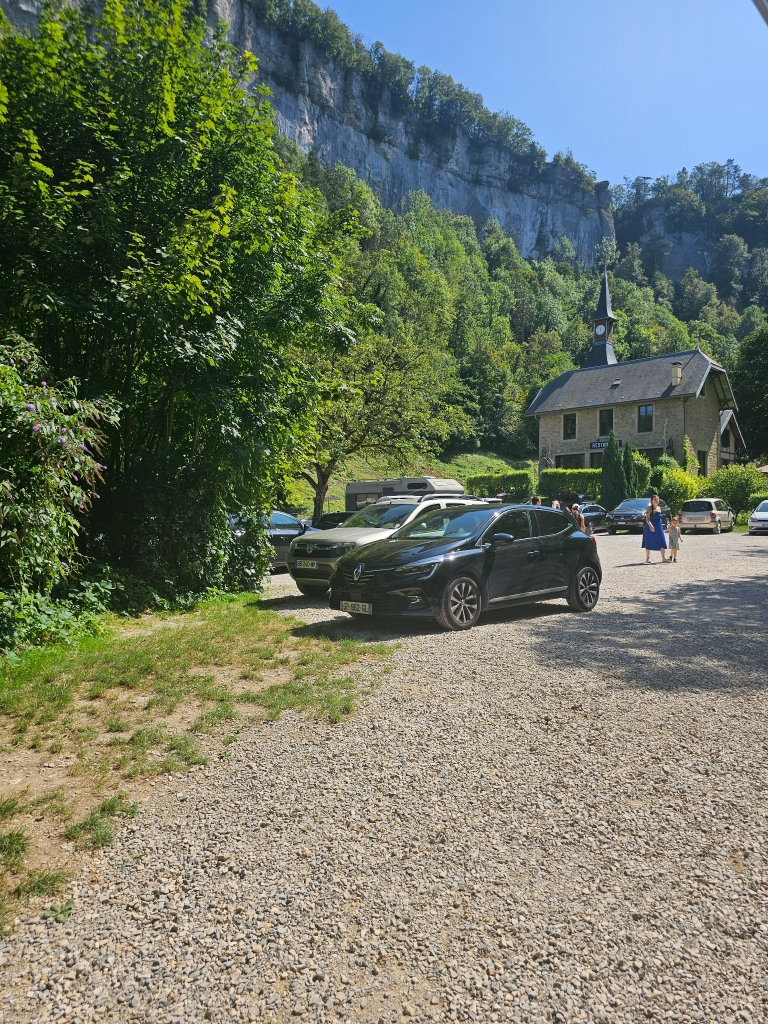
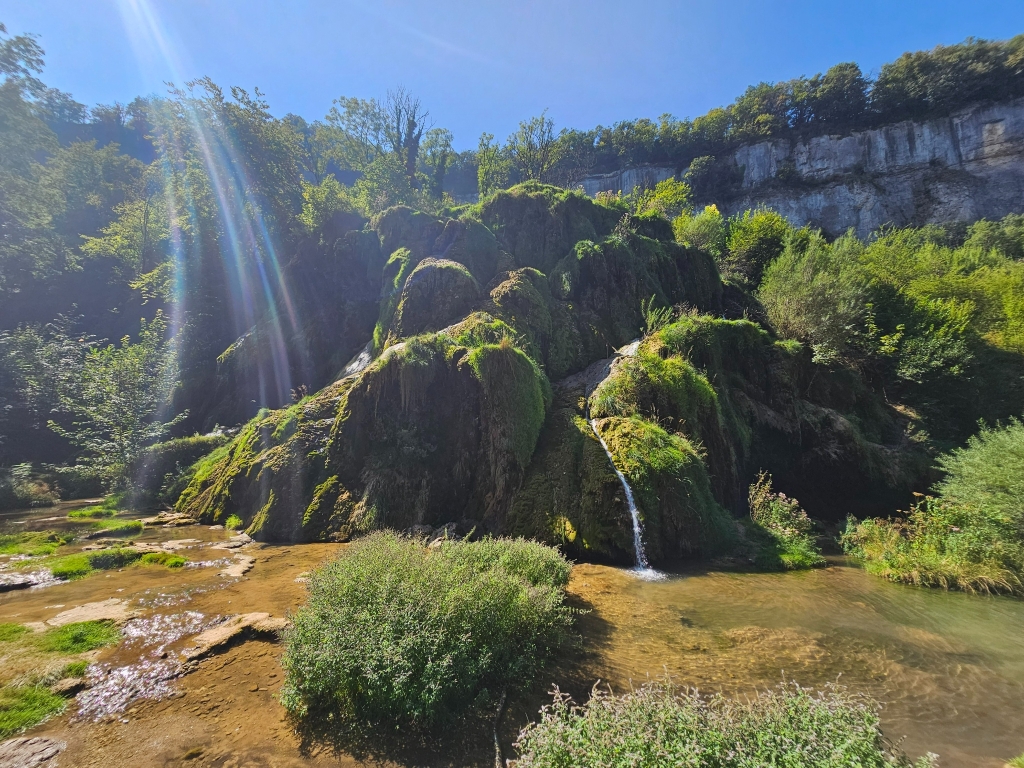
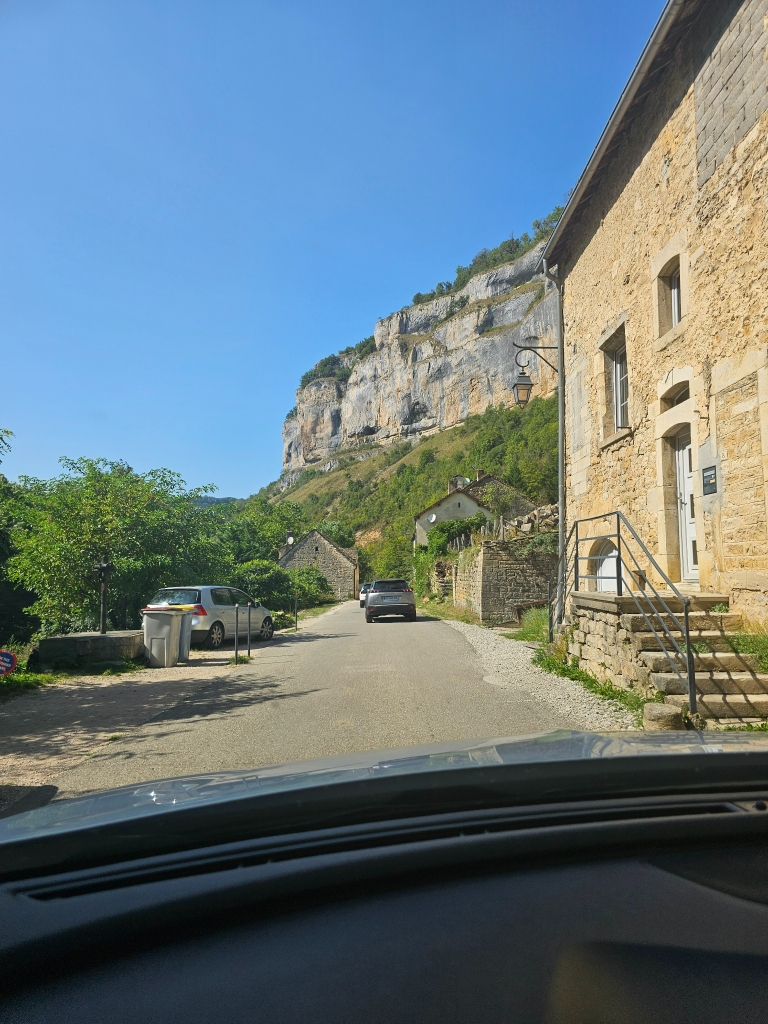
From there, we drove on to Baume-les-Messieurs, tucked deep into a valley. The descent alone is memorable. Surrounded by steep rock walls, this small village feels almost hidden. An ancient abbey, caves, towering cliffs and a waterfall all coexist in a surprisingly compact space.
We skipped the caves this time. With the heat and one parent working remotely, it simply wasn’t the right moment. But standing near the waterfall, feeling the cooler air and watching the clear water flow, was more than enough to create that unmistakable wow-feeling the Jura does so well.
Lac de Chalain, where we kept returning
If there was one place that truly anchored our week, it was Lac de Chalain. About thirty minutes from where we stayed, this large natural lake sits high in the landscape, surrounded by hills and forests. On sunny days, the water turns a deep blue that almost looks unreal.
Every visit started the same way. Stepping out of the car, taking in the view, and silently agreeing that this was the right decision again.
With temperatures climbing above 30°C day after day, water became essential. We swam, dried off in the sun, found shade, and went back in again when the heat returned. Time stretched here. Nobody rushed us, and we didn’t rush ourselves. It was one of the few places during the trip where everyone felt comfortable at the same time, which is rarer than it sounds.
It was also here that we realised something important. As beautiful as the Jura is, not every stunning place automatically fits every family, especially in summer. Long drives through the hills, adventurous cave visits and packed days sound appealing, but in reality, heat lowers everyone’s tolerance. Returning to the lake wasn’t about missing out. It was about choosing what worked for us.
Source du Lison and slow discoveries
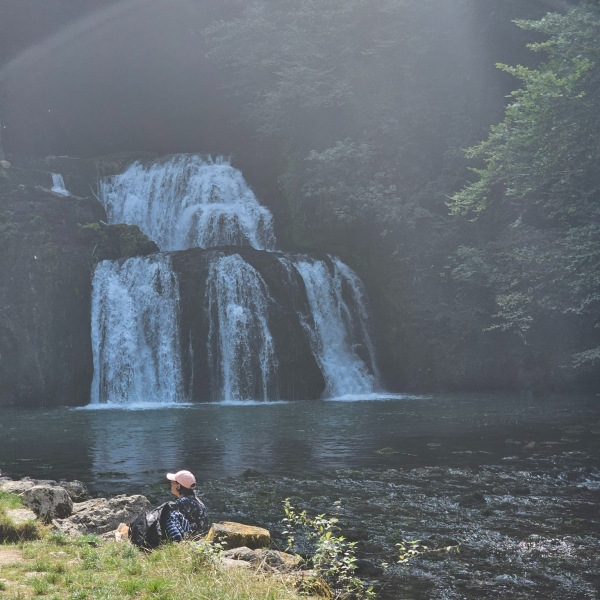
Another stop was Source du Lison, reached after yet another scenic drive through small villages and winding roads. The waterfall emerges from a cave at the foot of a massive rock wall, and the cooler air near the water is instantly noticeable, especially on a hot day.
That said, honesty matters here. By this point, it was already the third waterfall we had seen that week. And while this one is undeniably beautiful, there is a moment where you realise you’ve just driven an hour for… another waterfall. Still impressive, still refreshing, but no longer jaw-dropping in the same way as the first one.
We stayed for a short while, enjoyed the cooler air, took it in, and then moved on. Not every highlight has to be a long stop to be worthwhile. Sometimes it’s simply part of the landscape you pass through, adding another layer to how varied and rich the Jura really is.
Later that same day, we found ourselves back at Lac de Chalain once more. Swimming again, watching clouds build up in the distance, leaving just in time as a thunderstorm rolled in. Small decisions like that, leaving early, changing plans, became part of the rhythm of this trip.
What the Jura gave us, and what it didn’t
The Jura gave us beauty in abundance. Waterfalls, lakes, views that stop you mid-sentence. It also asked us to slow down, whether we wanted to or not.
The heat, the wildlife, the lack of air conditioning and the distances between highlights made this a region where flexibility mattered more than ambition.
Would we return? Absolutely. But not in the height of summer, and not in an old stone house without air conditioning, no matter how charming it looks in photos. The Jura is a place we remember fondly, not because we saw everything, but because we learned to choose what suited us best at that moment.
Final thoughts
Sometimes a place stays with you not because of what you managed to see, but because of what it quietly taught you. The Jura reminded us that adjusting expectations can be just as valuable as chasing highlights.
Practical takeaways
Distances in the Jura are deceptive, driving takes longer than expected
Water spots become essential during hot summer days
Old stone houses are beautiful but can be challenging in peak heat
Not every highlight needs to become a full outing
Returning to what works can be the best decision of the day



 The Eifel with kids

Reply to